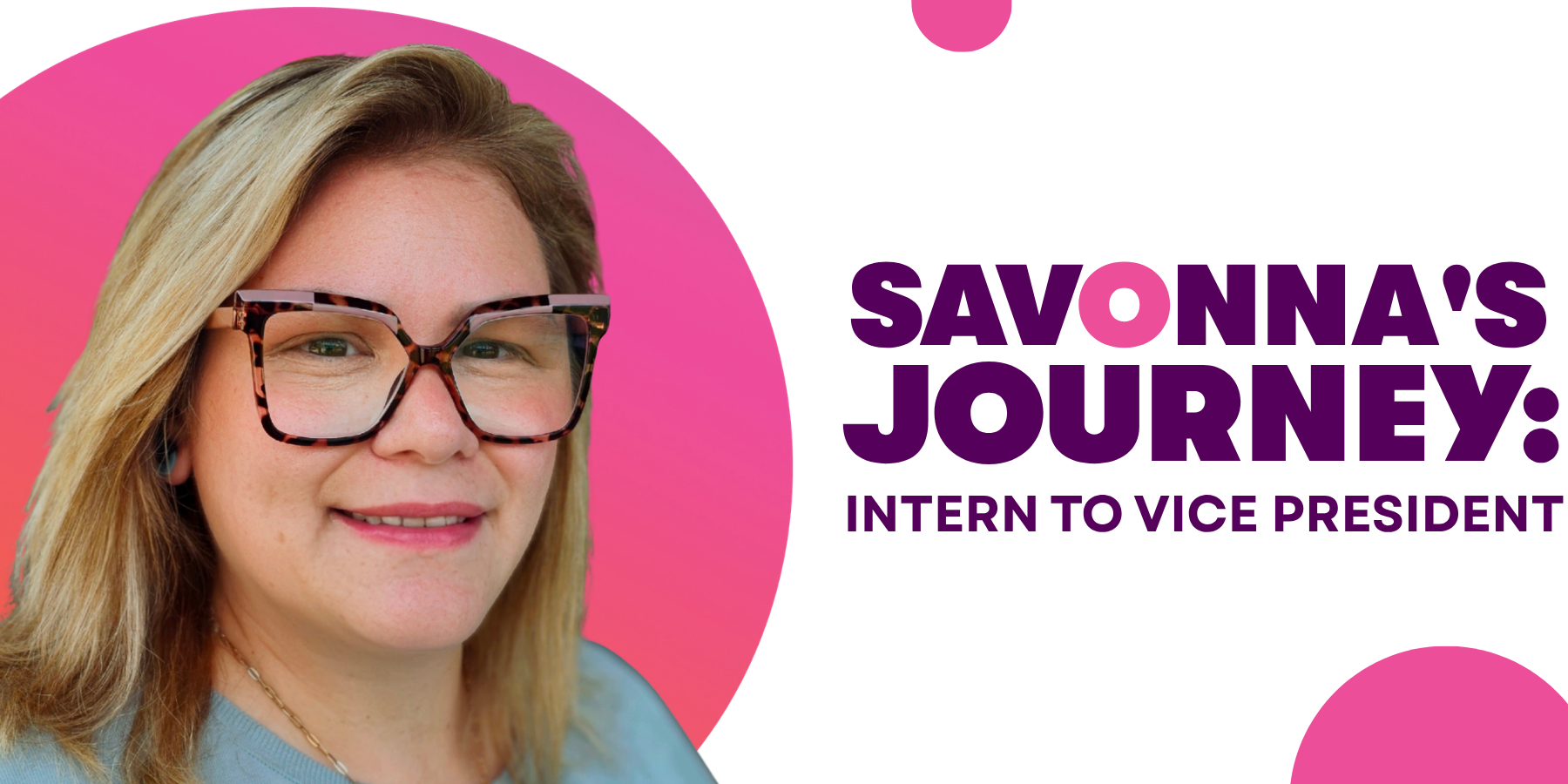
Built at Pivotal: Savonna's Journey from Intern to Vice President
Browse Categories:
This year, we’re thrilled to announce that Savonna Stender-Bondesson has been promoted to Vice President of Programs at Pivotal. Savonna began her journey with Pivotal as a social work intern before returning as our STEM Coordinator and Field Instructor for social work interns, working directly with scholars in Saturday STEM classes while overseeing interns. She later supervised both our high school and postsecondary coaches and went on to become Director of Coaching Programs. Now, Savonna will draw on her deep knowledge, expertise, and dedication to working with foster youth to lead all our programming and help Pivotal continue growing and serving young people.
We asked Savonna to reflect on her time at Pivotal, the work she has led over the years, and how it has evolved throughout her career. What follows is her story, shared in her own words.
I have worked for Pivotal for nine years. Before that, I worked as an investigating social worker for Santa Clara County and specialized in child welfare during my master’s program.
But the place that gave me the best foundation—the place that taught me how to truly work with people, support them, and see them; how to take care of myself so I could keep doing social work long-term—was Pivotal.
In the fall of 2013, I came to Pivotal as an academic coach. I worked with several high school kids, and I remember every single one of their names. I started at Pivotal after we started giving out scholarships but worked with many of those Pivotal scholars as their social worker when I worked for the county. I’ve watched them graduate high school, go to college, start families, and begin careers. I’ve also watched them go through the bumps and hurdles in between, the ones that can cause some of those milestones to start sooner than they expected or hoped, and others to take longer to reach than anticipated.
From my perspective, and from what I’ve heard directly from scholars, Pivotal really does feel different because we’re always trying to take meaningful action and do things differently. At the heart of every decision is a commitment to putting scholars first.
During my first full-time year with the county, my supervisor handed me a binder filled with sample court petitions from previous investigations. These examples were meant to help new social workers find the right language when drafting allegations of abuse or neglect for the court. As I was flipping through the pages, I saw a name that I recognized. It belonged to a young woman I coached two years earlier when I was a Pivotal intern. But what I was reading were deeply painful details about her life that I had never known about. In that moment, I remembered one of the first things Pivotal taught us: always see scholars as human beings first. You don’t need to know about their case history or the trauma they’ve experienced to support them. You wait until they choose to share their story, if ever, and allow them to decide what you know.
In that moment, I was so grateful that this practice was ingrained in me. I was reading things I didn’t know about the scholar, but who I knew her to be was a whole lot more than what was written in that petition. She was athletic; we used to play catch because she wanted to be on the softball team. She loved being with her siblings, and we’d do homework at the shared kitchen table in her grandma’s full house with her little cousins running around. It wasn’t a distraction for her; it was comforting. She liked eating at this one Mexican spot down the street from her home, and we went there at least once a month. Of course, it wasn’t perfect. She was behind on credits, hated certain subjects, and as athletic as she was, was still failing PE.
I loved that about Pivotal in that moment, and it’s what I continue to love about Pivotal today. It’s a place that’s always trying to do right by young people and be thoughtful about how we support them. It’s not a place that’s only looking to take the kid who has straight A’s and a 4.0 with a full ride to college. It’s the place that lets scholars take a nap in the breakroom because they were just so tired from walking all day. It’s the place that bought lunch for scholars when they missed food pick-up at the pantry, helped countless kids move their belongings when transitioning to another placement, found resources to help those living in their cars get repairs, and continued coaching scholars while they were in juvenile hall or placed far away.
Pivotal has always made room for that kind of support. Other organizations may not have the flexibility to do these seemingly small things for scholars, but for us, it’s so necessary to do this work. I can’t help you create a budget, do homework with you, or explore your career interests if you’re also dreading going back to a home you hate being in, or have nowhere comfortable to sleep that night, or you’re left with $12 at the end of the month after all your bills are paid and everything is feeling overwhelming. Sometimes, we have to first focus on removing those barriers so we can get back to academic and career goals.
As we plan for the future, we’re considering both what scholars need and what Pivotal needs to remain strong and sustainable for many years to come. It will allow us to continue having the privilege of serving scholars in the ways we do. I feel very hopeful about Pivotal’s plans and its future, and I know that our board and leadership team remain deeply committed to our mission, because so much of what we do truly works.